BETWEEN COFFEE & CHAOS: Nine Months of Holding Our Breath:
Nine Months of Holding Our Breath:
My Pregnancy With A Subchorionic Hematoma
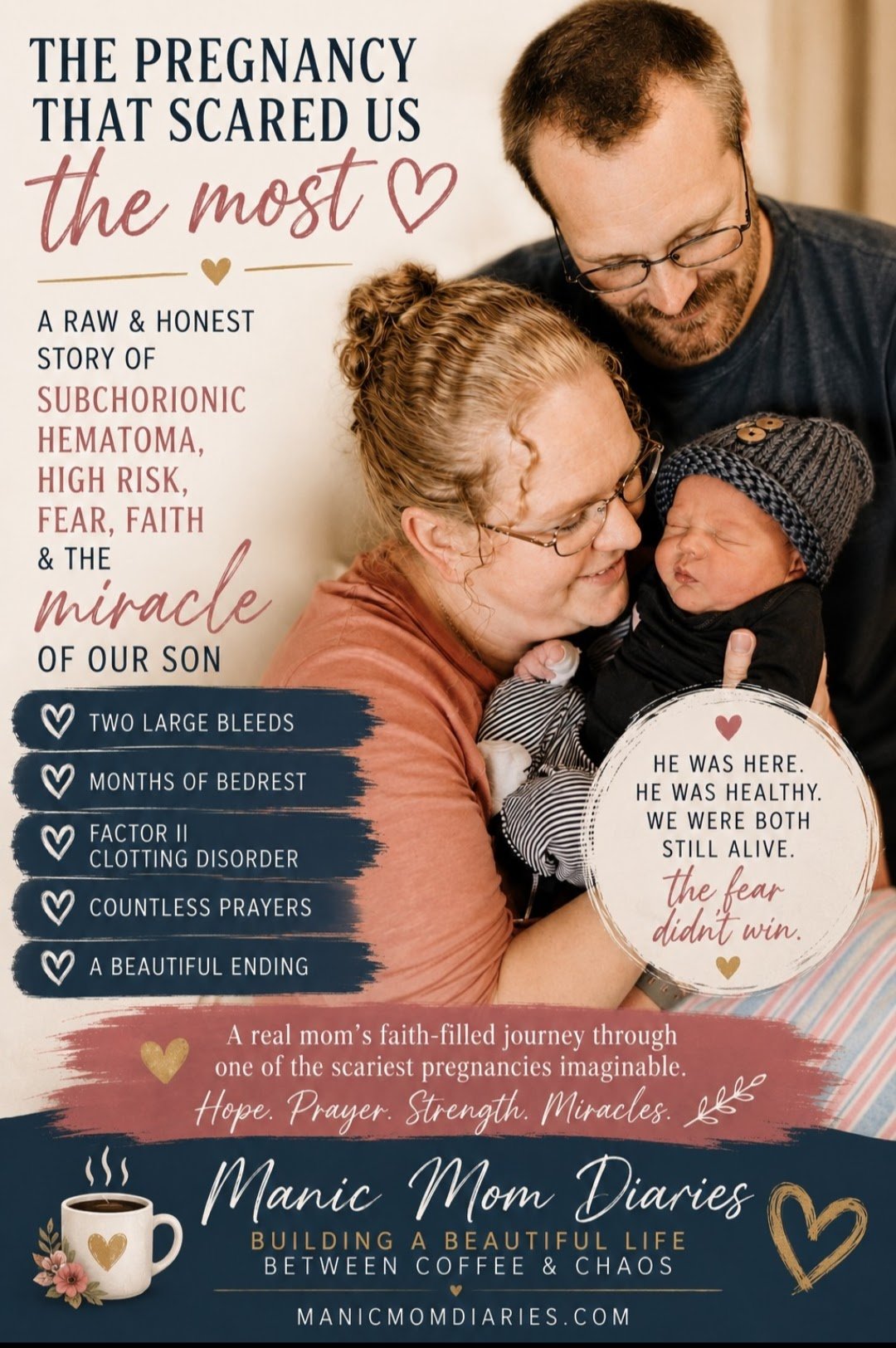
OUR STORY OF A SUBCHORIONIC HEMATOMA, FACTOR ll CLOTTING DISORDER, HIGH-RISK PREGNANCY, FEAR, FAITH, & THE MIRACLE OF OUR SON
After multiple miscarriages I was truly afraid when I saw blood. At almost 8 weeks along, I had feared that we were having another miscarriage. No miscarriage is easy at any point during pregnancy. But some pregnancies capture our hearts earlier on. Whether it was because you had been trying for longer or had had a loss prior to this one. This was one of those pregnancies for me.
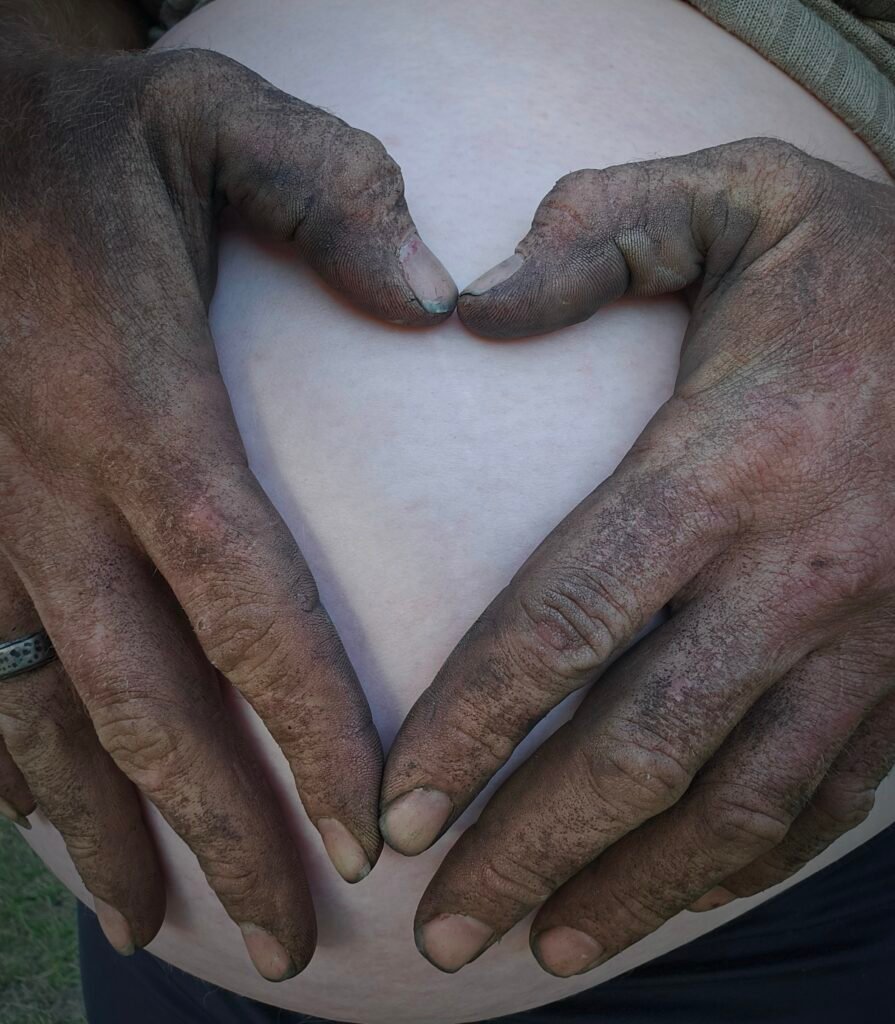
We had triumphed over a few rocky years, just renewed our wedding vows and decided to have another baby. We had three wonderful girls already and another girl would have been just as much of a blessing and simply meant God had other plans for us, but I really wanted to try one more time for a boy. I had my IUD removed and got pregnant after only a month of trying. I sensed I was pregnant after a bizarre dream and took a pregnancy test at work just to put the intrusive thought out of my brain. Four days before my missed period and it was positive.
We went to the hospital and were diagnosed with a subchorionic hematoma (SCH) during that eight week scare. And we had a much bigger bleed at 10 weeks. Soaking through my clothes and sending us back to the hospital emergency room. We found out there were two SCH. One of them was causing a partial detachment. We also found out we had a very low lining placenta with a partial previa.
“A subchorionic hematoma or hemorrhage (SCH) is a collection of blood that builds up between the uterine wall and outer fetal membrane during pregnancy. Commonly causing vaginal bleeding during the first trimester and significantly increasing the risk of miscarriages.”
This pregnancy was already considered high risk before the SCH. After our second miscarriage in 2011, including a loss at 14 weeks that required a D&C, my OB ran additional testing and diagnosed me with the Factor II (prothrombin thrombophilia) clotting disorder, a genetic condition that increases the risk of blood clots and pregnancy loss. Since then, every one of our successful pregnancies has required blood thinners. For this pregnancy in particular, it created a heartbreaking balancing act. I was taking medication to thin my blood to prevent another miscarriage while simultaneously experiencing significant bleeding from the subchorionic hematoma that I was praying would stop.
I was given standard care advice for a “threatened miscarriage.” Go home and rest, lay on my left side while sleeping, no sex and follow up with my OB-GYN as soon as possible.
My OB explained to me what a SCH was and how it further complicated an already high risk pregnancy. They gave me a similar care plan but with strict pelvic rest and partial bedrest.
Like any scared pregnant mom I did my research, found group chats about the complications and asked a hundred questions. I got tons of advice from supplements I should take, to questions I should be asking my doctors. But over all everyone consistently emphasized bedrest. Full bedrest.
At 11 weeks I had my doctor do a Clinical NIPT (Non-Invasive Prenatal Testing) to screen for any other complications. We received our results at 12 weeks – 3 days. Everything about this pregnancy appeared healthy and we found out we were having a boy. Our level of excitement was unmeasurable.
We made a conscious decision to celebrate every milestone instead of waiting until we felt “safe.” After so many scares, we realized there might never be a day that felt completely free of fear.
A lot of prayers, bedrest, and faithfully taking every medication and supplement my doctor approved, and we still had another big bleed at 13 ½ weeks. We were right back to terrified. Every appointment we held our breath and reached out to our prayer warriors. We had appointments with our OB-GYN and midwife every five weeks, ultrasounds to monitor the size and location of the SCH, and frequent visits with Maternal Fetal Medicine (MFM) for complete Biophysical Profiles (BPP) and additional monitoring.
I was scared every day. I couldn’t sleep. I wondered if I was selfish wanting another baby when we had three healthy girls. I feared with my other complications that I would leave my girls without a mother. That they would resent their brother if I didn’t come home. This fear was so consuming I was certain I would never try for another baby. This was it for us. This was our boy even if we never got to bring him home.
At our 21 week Maternal Fetal Medicine appointment, we were told that we still had a previa, the baby was a little small, but there were no signs of the SCH. My OB-GYN said I could come off the bedrest but to take it easy and no heavy lifting. We’d had no bleeding since 15 weeks. But despite that I had read so many personal stories about the Subchorionic Hematoma returning I was too scared to come off bedrest or resume other bedroom activities. It was a fear based judgment call that my husband supported.
At 25 weeks, we still had a small baby boy, the placenta had moved to the recommended 20mm and still no sign of a returning SCH.
We made it to 28 weeks. No previa at all, no subchorionic hematoma, and the baby was catching up in size. We were officially discharged from Maternal Fetal Medicine – unless our usual OB-GYN felt I needed to return for any reason.
At 33 weeks with no signs of a returning SCH, no previa and baby boy reaching 4lbs, I finally felt safe enough to come off the bedrest. I had a beautiful baby shower, resumed some intimacy, and began nesting in our nursery.
We had decided to induce at 38 weeks. We had a final ultrasound the morning of my induction to avoid any surprises. Instead, we found one more. My amniotic fluid had increased, and although our son was head down, he wasn’t in the ideal position for birth. His head was turned toward my side instead of facing my back, something we had experienced before with one of our daughters, who had been born face up. We did a second membrane sweep at the doctor’s office that morning before checking into Labor & Delivery at 4:00 PM. A second IV was immediately placed due to my increased risk of hemorrhage and additional blood clots.
I was determined to deliver with my preferred OB-GYN on shift, so we immediately decided to try cervical balloon dilation also known as foley balloon catheter dilation for cervical ripening. That was left in place for 3 hours. Once removed I was at 6cm. I was able to go pee and then they started the pitocin. Everything was going beautifully at first but slowly. I was rolled, and repositioned every hour or so to try and speed up labor. At midnight I was still at 6cm and a smidge. We ordered an epidural. The anesthesiologist was young and didn’t have much experience with my additional complications. I had scar tissue from a previous failed epidural with my second delivery. He was very skeptical about being held liable for any epidural injury and even tried to persuade me to reconsider. It took him nearly an hour to place it properly. They broke my water at 3 AM.
At 7:30 AM suddenly everything on my left side came roaring back to life. It was no longer under the epidural. The pump had run empty. And it was only my left side. It was an extremely bizarre feeling of pain so severe I was screaming, shaking and vomiting. After months of living in fear, every unexpected complication felt catastrophic, as if it was the end. I began to panic and hyperventilate. I vaguely remember my doctor rubbing my back and asking what was going on. He ordered fentanyl in my epidural immediately and administered it himself. I immediately went to sleep until around 9 that morning. It was the first real rest I’d had since checking into the hospital.
My doctor stayed an extra hour and half into the next shift and even offered to “take the baby through the sun roof,” a cesarean delivery. I was adamantly against a c-section and that is why it had not been offered before this point. My fear of him leaving was irrational but there nonetheless. Eventually I accepted him leaving and that I couldn’t control everything. Or anything in this pregnancy.
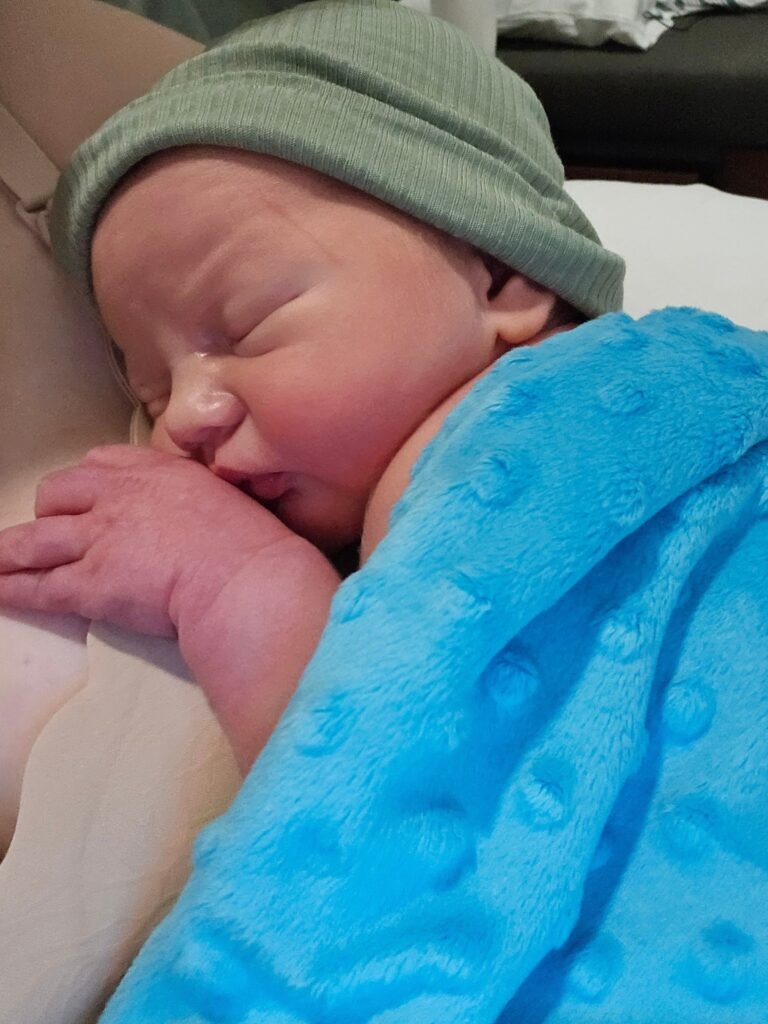
9:45 AM active labor had begun. I was still completely numb from the additional medication in my epidural that I was not much help with pushing. After six pushes our son practically glided out. No tearing and no stitches. Thirty-two minutes after my preferred doctor left Sawyer Jude was born.
He was here.
He was healthy.
We were both still alive.
The fear didn’t win!
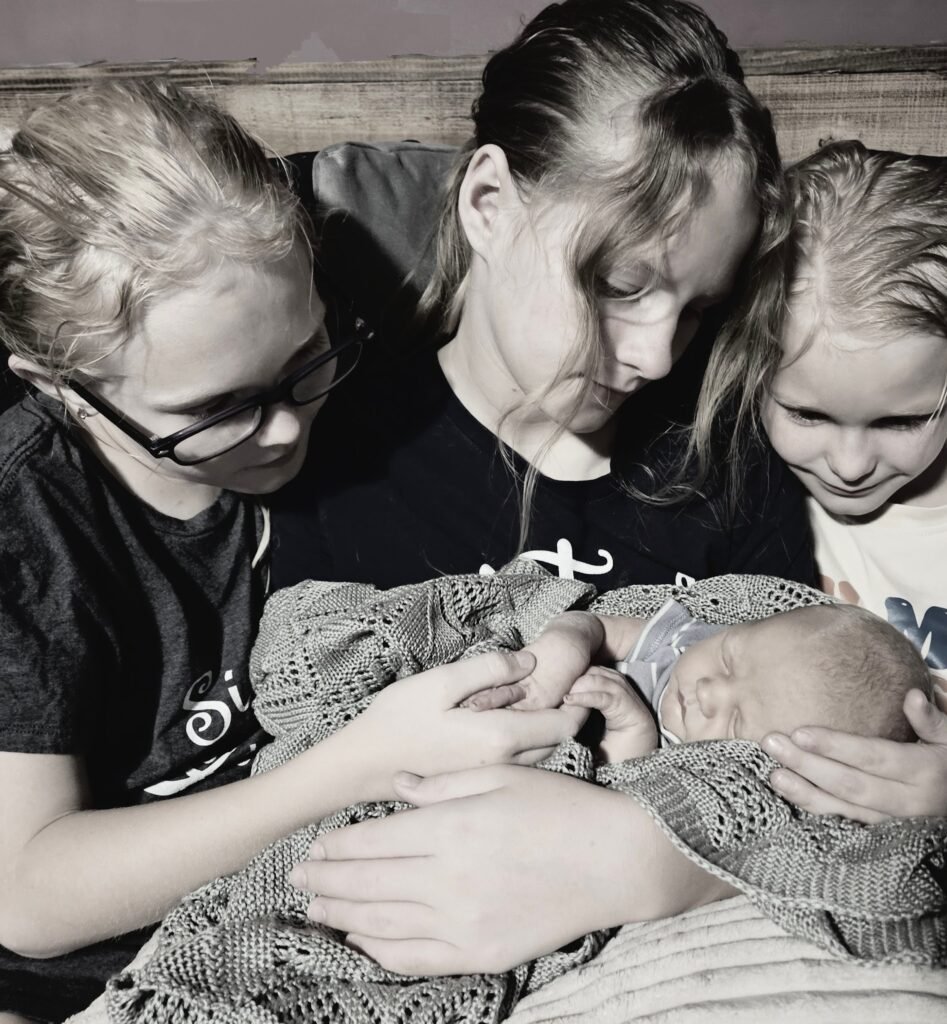
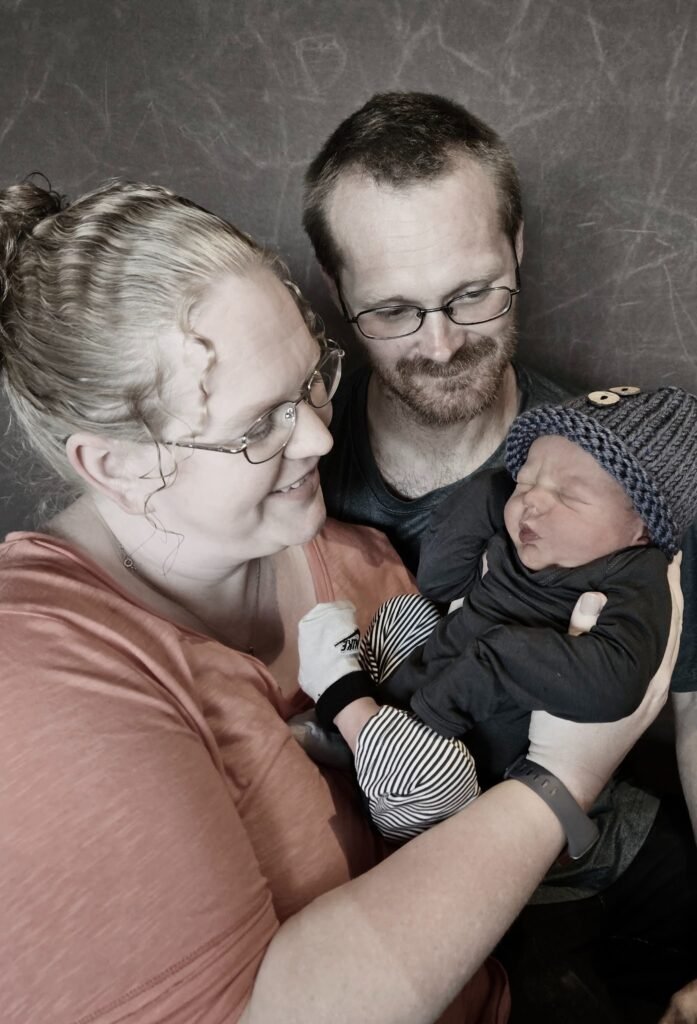
After months of fearing the worst, the pregnancy that scared us the most ended with the healthiest start any of our babies had ever had. Sawyer arrived weighing 7 pounds even, measuring 20½ inches long, and earned an Apgar score of 9, the highest of all four of our children.
When I heard his cries and they placed him on my chest I cried harder than I did after any of my previous deliveries. I was wrecked by guilt over every doubt I’d carried through this pregnancy and overwhelmed by grace and gratitude that we had made it.
My little boy lay on my chest, and it felt as though every prayer we’d whispered over the previous nine months had finally been answered.
One of the unexpected lessons from this pregnancy was discovering who my support system really was. Some of the people I assumed would walk closely beside us were strangely silent. There were Sundays when my husband took our girls to church while I remained on bedrest, yet very few people ever reached out to ask how I was doing. Some even questioned whether I was really as sick as everyone claimed.
Then there were the people who surprised me. My dad’s wife, whom I’d never been extremely close to, faithfully checked on me after appointments. My home church, more than 900 miles away, prayed for our family every Sunday and sent messages asking for updates. People I had not seen or talked to in years. Distance didn’t matter. Compassion did.
I experienced the same thing outside the church. Before I went on bedrest, I was told I was simply hormonal and hysterical. Friendships I thought were solid quietly faded away. After months confined to my home, I ran into a former coworker at Walmart. Before long, I heard people were saying, “She seemed perfectly fine for someone who had so many complications.”
Moments like that reminded me how easy it is to judge a chapter of someone’s life when you’ve only seen a single page.
I pray that you all have the same spousal or partner support that I had and still have. My husband picked up every bit of slack, took our girls to church without me, did school drop off, grocery shopped, went on field trips and more than once reminded me that our intimacy and love was not dependent on sex. Remember to thank your partner and entire support team often.
If you’re just beginning this terrifying journey, I want to leave you with a few things I learned along the way. First, trust your gut. My doctors recommended pelvic rest and partial bedrest. Staying on full bedrest became a personal decision my husband and I made because it gave us peace of mind. If bedrest, not just pelvic rest or partial bedrest, gives you peace of mind then express that to your doctors as we did. Every pregnancy is different, so don’t be afraid to discuss your concerns and options. Always communicate your fears and anxiety with your doctors and partner, no matter how neurotic you think they are.
Remember, there is power in prayer and positive thinking. Try not to take your peers’ ignorance to heart and always go to the ER if you need immediate closure. I couldn’t afford private ultrasounds every time I was nervous. I made four different trips to the ER in the first trimester alone. It doesn’t matter if they think you’re crazy. Not knowing will make you crazy.
~~~~~ 💛 ~~~~~
Editor’s Note: The content published on Manic Mom Diaries reflects my personal experiences and opinions. It is intended for informational and entertainment purposes only and should not be considered medical, legal, financial, nutritional, behavioral, mental health, or other professional advice. Always consult a qualified professional regarding your own circumstances before making decisions about your health, finances, or other important matters.
Until next time…
Keep building a beautiful life between coffee & chaos,
💛 Tiffany

© 2026 Tiffany Davis | Manic Mom Diaries • All Rights Reserved.